Monday, January 16, 2023

River Island Park - January 16, 2023

Putting in at River Island Park
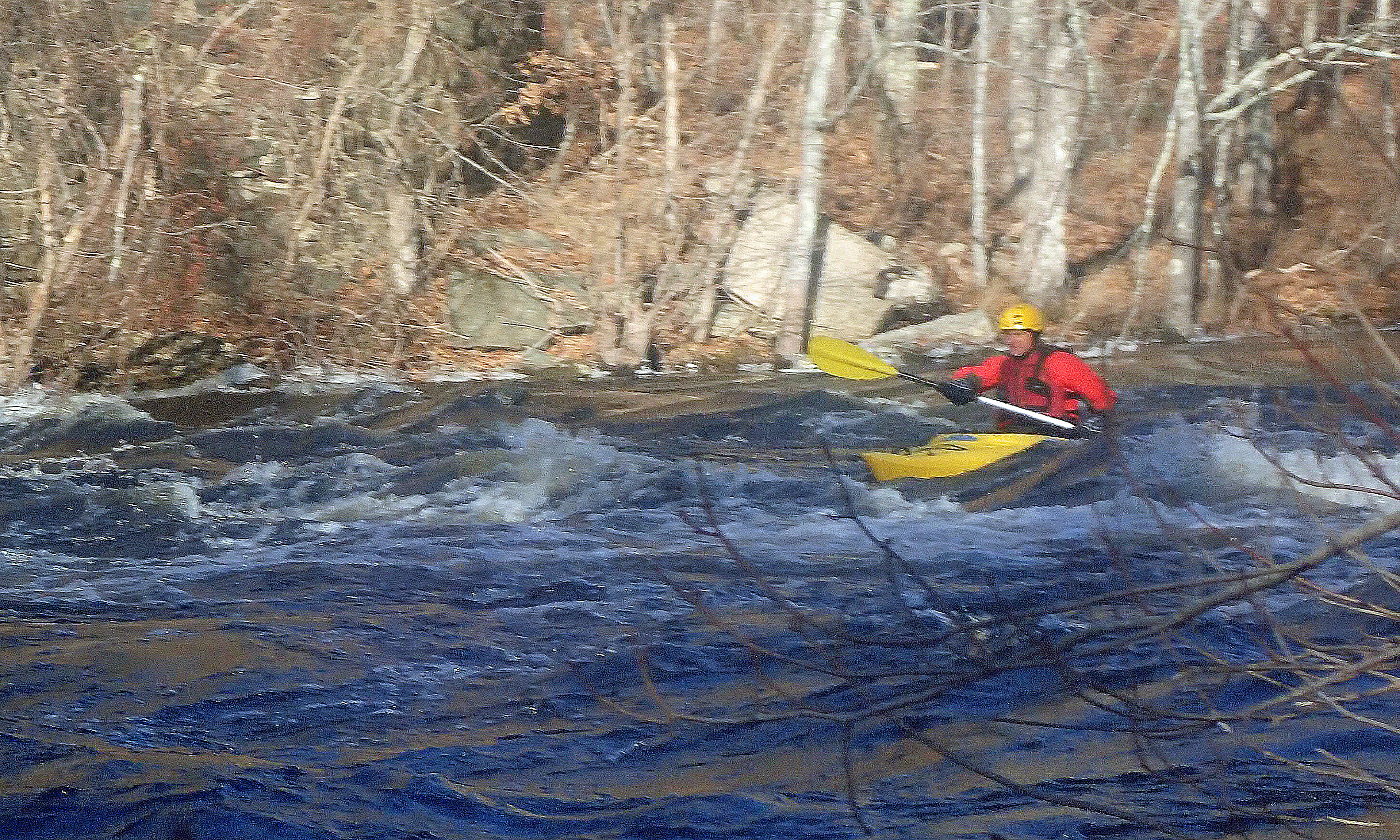
With the recent controversy about the city removing homeless camps along the Blackstone River, I decided to do a run at River Island Park. This would be my 40th trip here since I started keeping track in 2009, so I am pretty familiar with the area. The river was at a nice level - 3.6 feet, 1,300 cfs. There was a little snow on the ground when I put-in, and a few more flurries when I was out on the river. It was starting to feel like winter.

The Blackstone River has suffered many indignities over the years. It was dammed and used as a power source for industry in the nineteenth century, and it became a cesspool for the disposal of sewage and industrial waste in the twentieth century. With the establishment of the Blackstone River Valley National Heritage Corridor in 1986 and the ongoing construction of Blackstone River Bikepath, much has been done in recent years to improve conditions on the river. 

Campsite along the river in
January 2022
Unfortunately, one section of the river that has not benefited from this progress is downstream of 
River Island Park. This isolated area, hidden from view behind retaining walls from Woonsocket’s industrial past and the flood control levee that protects the city from potential flood waters, has become something of a no-man’s land. 

I am one of the few people who regularly paddles this section of the river. I launch my canoe at River Island Park, paddle downstream to enjoy the rapids below the Bernon Street, Court Street and P&W Railroad bridges, then walk back to my car along the flood control levee and Main Street Bypass. Along the way I get a view that few others see, and it is not always pretty.

The same site after the clean-up in
January 2023
With its location near Woonsocket’s downtown, this isolated section of the river has become a magnet for homeless camps. Before the recent clean-up, trash from these camps littered the banks. While paddling here I have had some interesting interactions with local residents - 'nuf said on that. The number of people I see hanging out in the area has definitely increased in recent years - maybe because a local social service agency encourages camping by giving out tents and sleeping bags. 

Of course, I realize that there is a serious problem with homelessness in the city. The fact that we have people living along the river in tents in the dead of winter is an indication of just how serious the problem is. I'm not sure what the answer is, but giving people the means to live “out of sight and out of mind” in decrepit camps along the river doesn't seem like the solution. 

On the bikepath heading back
to River Island Park
The city's recent clean-up included 13 workers who spent an entire day removing eight dump trucks loads of debris from the area. As I paddled down the river on this trip I was amazed at how much better the area looked after the clean-up. And of course, all that trash won't end up in the river next time that it floods. 

With plans to extend the bikepath into Market Square and build a greenway along the Main Street Bypass, this area has the potential to be transformed from a no-man's land into an attractive recreational space - further linking the river to the city's historic downtown. I would love to see that happen. We'll see. Already, a couple of new tents have appeared along the river. Definitely a cold, snowy day to be living outside along the river. 

New tent along the river - January 2023

Sunday, January 15, 2023

Harold Parker State Forest/Skug River Reservation - January 14, 2023

Paddlers on dry land -
Bob, Erik, Bill and Jonathan
Its been a while since I've been out with Papa Joe and the crew, so I decided to join this week's hike at Harold Parker State Forest/Skug River Reservation. The drive was a little longer than I would usually do for a hike, but I really needed to get out and get some exercise.

The Harold Parker State Forest in Andover includes over 3,000 acres of forest with over 35 miles of logging roads and trails. The area was inhabited by Pentacook Indians until it was settled by English farmers around 1650. By the middle of the nineteenth century the farms were abandoned and the fields have slowly been replaced by woodlands.

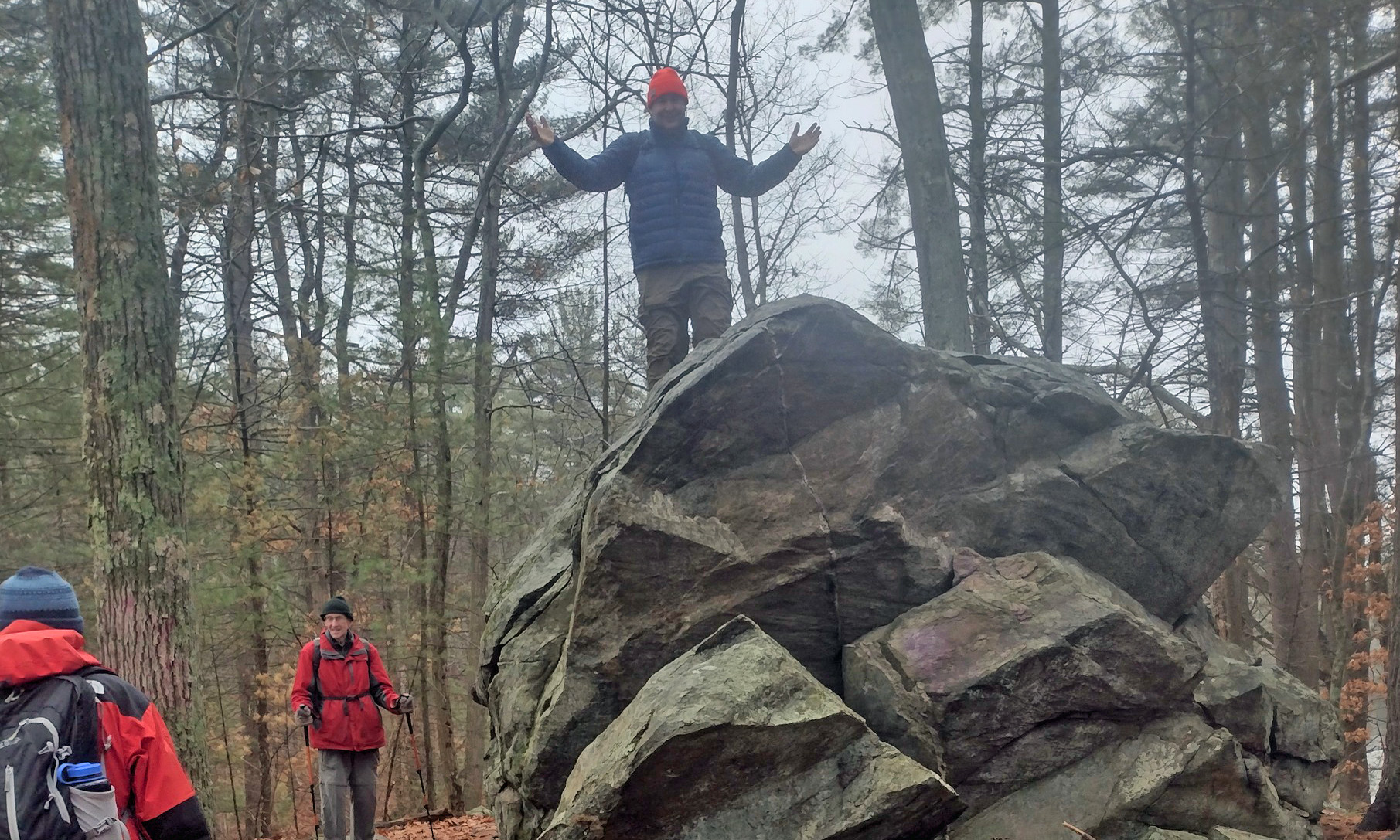
King of the rock -
now how do I get down?
We met at the trailhead at the Skugg River Reservation (315 Salem Street, Andover, MA) and headed out on boardwalks and bridges through the wetlands. The trail eventually climbed into a pretty pine forest as we wove our way around the Delano, Brakett, Field, Collins and Bear Ponds. 

The trail was littered with huge glacial erratics. I used my climbing skills to get up on one, and then had a hard time getting back down. We were on the Bay Circuit Trail for a short time on the way back to the cars. My knee was fine, and it was nice to see Bill, Jonathan and Bob.

Links:

Monday, January 2, 2023

Providence - January 1, 2023

I-way Bridge and the Hurricane Barrier
On New Year’s Day there are always a lot of options for trips. Although I should have been more ambitious (something like the Lower Winni), I was leaning toward a trip on the Upper Winni with Conrad. A trip with the CTAMC led by Paul D. on the Crystal section of the Farmington was also in the running. In the end, the decision was easy since I had to stay local due to family obligations. I decided to take my kayak out for a trip on the Providence River.

The Providence River is formed at the convergence of the Woonasquatucket and Moshassuck Rivers. It flows south through downtown Providence for a mile to its convergence with the Seekonk River at Bold Point/India Point. It then opens up into Providence Harbor.

Approaching the convergence of the
Woonasquatucket and Moshassuck Rivers
I put-in at 11:30 at Bold Point in East Providence and headed out across Providence Harbor towards the I-way Bridge and the Fox Point Hurricane Barrier. The wind was from the west producing small wind-blown waves, and the tide was going out so the current was strong at the mouth of the Seekonk River and at the Fox Point Hurricane Barrier. I passed through the hurricane barrier and into downtown Providence.

In the heart of Providence the river passes along the Riverwalk. I paddled up past the convergence of the Woonasquatucket and Moshassuck Rivers and into the Cove at Waterplace Park before heading back down through the city and back to Bold Point. It was a mellow paddle, but at least I was out on the water on New Year's Day.


Downtown Providence
Links:

Wednesday, December 28, 2022

2022 Year End Review

Blackstone Gorge on New Year's Day
I won't be out this Saturday, so my paddling is done for 2022. The year started with a New Year’s Day trip at the Blackstone Gorge, and ended with a day-after-Christmas trip on the Quinebaug. In between, it was another great year for paddling - especially for whitewater. 

I did more hiking than paddling in January and February, but that changed in March when I saw that the NHAMC was doing a series of class III step-up trips aimed at class II paddlers. It seemed like a great way to kill two birds with one stone – ease back into some more challenging whitewater and paddle some rivers up in NH that I don’t get on very often. 

Step-up paddle on the Pemi in Woodstock
I did five of the eight class III step-up trips including first runs on the Ammonoosuc, the Contocook and the Lower Winni. I also had two successful Zoar Gap runs (1, 2) in the summer, and a first run on the class III Wonalancet in the fall. In total, I did 14 whitewater trips this year compared to 5 in 2021 and 1 in 2020 – my whitewater paddling really dropped off during the pandemic.

After paddling so much whitewater my arthritic knee started to flare-up and kneeing became a problem. Since it looked like I would be sitting more than kneeling, I decided to pull the trigger and buy a sea kayak. I ended up buying a 2004 P&H Capella 166 RM

The new Capella at Bethel Point
I took the Essential Kayak Skills class at the Kayak Centre to learn how to paddle this new boat. So far I have only done one sea kayak trip - North Kingstown Town Beach at the RICKA Picnic, but more are in my future.

I led two Blackstone Valley Paddle Club trips – Rice City Pond and the Blackstone Gorge - and four RICKA Flatwater trips - ProvidencePoint Judith Pond, Sudbury (co-led with Bill) and the Charles. I also coordinated the Flatwater Training at Stump Pond with Bill, and gave the Founders Awards to Barbara and Henry at the RICKA Picnic.

 Surfing Typewriter at Tville
I did 52 trips, which is 3 less than my 12-year average of 55 trips. I had four swims – the Playhole on the Pcat, Double Drop and Typwriter at Tville (a two swim night) and poling up the drop below the Route 101 Bridge on the Souhegan.

Here are some of my more significant trips:
Here is a video of some of my favorite trips.
 

I paddled almost every day of my summer vacation on Great Island including a RICKA trip on Point Judith Pond


I did get out for a spring camping trip with Bill and Danny at Burlingame, and a fall Allagash trip with Jonathan, Conrad and Jules.

The Papa Joe crew at Noon Hill
With a cold start to the year, I did a few local hikes, and a few hikes with the Papa Joe group.
In terms of resolutions from last year, I did pretty well.  I did paddle in southern Maine, I did paddle more whitewater, and I did make it up to the Allagash. Unfortunately, I didn’t make it back to the Dead.

Camping on the Allagash
In terms of resolutions for 2023, they are a lot like 2022.
  • Keep practicing with my new sea kayak – especially in rough water conditions.
  • Keep camping – maybe the St. John, or the Allagash again. I’d still like to do a summer trip on the St. Croix, and now I can try the Maine Island Trail in my kayak.
  • Keep paddling whitewater – I don’t want to lose this year’s momentum, but I hope my knee holds up.
  • Get back to the Dead – always a great trip.
  • Practice rolling – I’ll keep including it until I do it – maybe in the sea kayak.
Lots to do in the coming year, and there are still plenty of rivers to paddle, plenty of trails to hike, and plenty of places to go camping. Happy New Year everyone.

Monday, December 26, 2022

Day-after-Christmas Paddle - Quinebaug - Danielson to Plainfield - December 26, 2022

At the put-in
It was just me and Paul for my last trip of the year - a day-after-Christmas trip on the Quinebaug. 
We ran the 5-mile section from Danielson to Plainville. We usually go another 5-miles down to Canterbury, but with the cold temperatures we decided to cut the run short. 

I met Paul at noon at Wayne R. LaFreniere Memorial Field (39 Wauregan Road, Danielson) for the shuttle down to the Fish Hatchery (145 Trout Hatchery Road, Plainfield). The temperature was 30° when we launched and icicles lined the banks, but the river was at great level - 5.8 feet, 2,000 cfs.

Running the broken Dyer Dam
The river starts off with quickwater until you hit the first rapid - the broken Dyer Dam about 2-miles downstream. There is rebar on river right, so the best line is center, or to the left. More quickwater follows until 5-miles downstream when you hit the broken Wauregan Dam Rapid at the Wauregen Road Bridge. The waves at the top right were huge, but the line just left of center was easy.  

The trip took up about 1.5 hours. By the time we got to the fish hatchery I was cold and my knee was sore. I was glad that we didn’t have to paddle the rest of the way down to Canterbury. Thanks to Paul for a warm-up cup of coffee at Dunkin' on the shuttle back.

Running the Wauregen Dam Rapid
Links:

Friday, December 23, 2022

"Twas the Night before Winterstorm" - Whitewater Kayak Version

Twas the night before winterstorm, when all thro' the watershed,
Not a creature was stirring, not even a biped.

The booties were hung in the rafters with care,
In hopes that a rainfall soon would be there.

The skirts were nestled all snug in their bins,
While posts were made of splats’n spins.

A paddler with pet, and a drink on tap,
Had just settled to plan their spring melt-chasing map.

When out on the river there arose such a clatter,
They sprang in the van to see what’s the matter.

Away to the window they flew like a flash,
T’weren’t no shutters, and stuck was the sash.

The moon on the crest of the rain swollen river,
Gave reminder that in cold water we shiver.

When, what to the wondering eyes should appear,
But a whitewater kayaker donning immersion gear.

With a happy paddler, so lively and quick,
They knew in a moment it mustn’t be a trick.

More rapids to ply, the friends they came,
And some whistled, and shouted, and call'd them by name.

Now Dagger, now Dancer, now Pyranha, and Prijon,
On Torrent, on Remix, on Rewind and Antix.

To the top of the eddy! To the big bow stall!
Now paddle away! Paddle away! Paddle away all!

As dry leaves before the wild hurricane fly,
When they meet with an obstacle, boof to the sky.

So up to the rock-top the paddlers they flew,
With lungs full of noise - and hoots ‘n hollers too.

And then in a twinkling, their AW app did ping,
Announcing and notifying each river crest-ing.

As they drew on their pogies, and stomped all around,
Down the chute, their seal launch was found.

They dress'd all in Gore, from the head to the toes,
And the clothes were synthetic right up to the nose.

A bundle of ‘biners were in a dry sack,
And they look'd like the real paddler, and not some hack.

Their eyes - how they twinkled! Their dimples how merry,
Their cheeks were like roses, each nose like a cherry.

Their water splashed mouths were frosted with snow,
And the faces of winter paddlers had such a glow.

The stump of a grabloop and the knife frozen in sheath,
And ice crusted helmet encircled the head like a wreath.

They had frosty faces, and a whole lot of joy,
That showed when they laugh'd of Winter A’hoy.

They were bundled and frump, like that jolly old elf,
And you’d laugh when you saw them in spite of yourself.

A wink of the eyes and a twist of the torso,
Soon gives you to know we had nothing more, so.

They spoke not a word, but went ahead through the water,
And surf'd all the waves; then roll'd as an otter.

And finally laying the boats on their edge,
And giving a nod, t’was the final party surf on a ledge.

They sprung to their cars, to turn on the heaters,
And away they all flew, the cold downtrodden beaters.

But we heard them exclaim, ere they drove out of sight
Happy Paddling to all, and to all a good night.


This version adapted by Brad Walker

Thursday, December 22, 2022

Cold Water Paddling

Winter is upon us, and for those of us who are year-round boaters, it is time for a reminder on the dangers of cold water paddling, and how to minimize your risk.

How cold is cold water?

"Cold water" is probably not a cold as you think. The American Canoe Association sets its thermal protection threshold at 60 degrees. For us in southern New England, water temperatures generally don’t hit 60 degrees until sometime in June, and remain above that threshold until sometime in October. That means anyone paddling from November to May is paddling in cold water conditions.

Water Temperature in Narragansett Bay
During the "off season", the water in southern New England can be very cold. Narragansett Bay reaches its coldest temperature (high 30’s to low 40’s) in late February/early March. While air temperatures increase quicky through the spring and early summer, water temperatures increase more gradually. The opposite is true in the fall when air temperatures drop quicker than water temperatures. Area rivers follow a similar pattern, but generally get 5 to 10 degrees colder in winter, and 5 to 10 degrees warmer in summer.

Why do we need to be concerned about cold water paddling?

There are three major risks resulting from cold water immersion - cold shock, physical incapacitation and hypothermia – and all three greatly increase the risk of drowning.

Cold shock comes first. It can happen the moment you hit cold water. Cold shock can cause a loss of breathing control often referred to as the “gasp reflex”. This is especially dangerous in rough water conditions where the ability to coordinate your breathing with wave splash is required.

Physical incapacitation comes next. Immersion in cold water causes your muscles and nerves to cool to the point that they simply stop working. In frigid water without protection you can lose the ability to use your hands in a matter of minutes, and the ability to use your arms and legs shortly thereafter, making a self-rescue or even an assisted rescue more difficult.

Hypothermia comes next. Hypothermia results from a drop in your core body temperature. To compensate, blood flow shifts from your extremities to the vital organs in your body core. This will eventually result in confusion and disorientation that can rob you of the ability to make sound judgments about your safety.

So how can you protect yourself if you are paddling in cold water?

Cold water immersion is a race against the clock, and for those who are not prepared, it can be a desperate race. When paddling in cold water conditions please remember:

Always, always, always wear your PFD

By keeping you floating at the surface, a PFD can reduce (but not eliminate) the risk of sudden drowning due to cold shock or physical incapacitation. Make sure that your PFD is properly sized and adjusted so it doesn’t rise up around your ears or slip off entirely.

Never paddle alone - three boats are recommended for safety

Physical incapacitation and mental disorientation are inevitable with cold water immersion, potentially making self-rescue impossible and assisted rescue more difficult. Paddling with a strong and knowledgeable group will increase your likelihood of getting back in your boat.

Keep the trip short, and well within the paddling ability of the group

We all like to push our abilities, but save long trips in difficult conditions for the warm water season. Don’t push the envelope in cold water conditions.

Dress for immersion in a wetsuit or drysuit

Beginners often make the mistake of under-dressing when the air is warm, but the water is cold. Since you can never rule out an unexpected swim, you should always dress for the water, not the air. Water is approximately 25 times more efficient than air at drawing heat away from your body, so you need protective gear like a wetsuit or drysuit to prevent excessive heat loss.

Layering for Paddlers

Boaters, like other outdoor adventurers, are wise to adopt a layering system for thermal protection. Layers allow you to add and remove pieces to match changing conditions, and help your body maintain a safe, comfortable temperature. These layers fall generally into three categories: base layers, insulating layers and outer layers.

Base Layers

Start with a moisture-wicking base layer next to the skin. Synthetic fabrics such as nylon, polyester and polypropylene work well since they don’t absorb water and move moisture from your skin. Stay away from cotton - it absorbs water, dries slowly and loses its insulating value when wet.

Insulating Layers

Insulating layers provide the thermal protection that allow you to remain warm, calm, and able to function while you’re in the water. Fabric based insulating layers hold in your body’s heat, but need to be kept dry under protective outer layers. Theses insulating fabrics include fleece, wool, and other insulating, non-absorbing materials. You can use multiple thin layers to adjust to a variety of conditions.

Neoprene is an insulating layer that will work well even when wet. Neoprene rubber contains thousands of tiny gas bubbles that slow down heat transfer. Neoprene “wetsuits” come in a variety of styles including “shorties”, "Farmer Johns" and separate shirts, jackets and pants. 
Farmer Johns (sleeveless wetsuits with full-length legs) are the most popular for paddlers since they protect the core and provide good freedom of movement, but they will need to be supplemented with additional layers in the coldest water. Wetsuits must fit tight to minimize the influx of cold water, and must be thick enough to provide appropriate insulation.

Outer Layers

Windproof and waterproof outer garments round out your cold water protection. An outer layer made with a material featuring a breathable coating or membrane is definitely preferable. This allows perspiration moisture to pass out of the garment, keeping the inner layers drier, and significantly increasing your comfort.

Splash wear is simply a waterproof outer layer that is designed to keep your under layers dry if you get splashed or rained on. If you’re using neoprene as your insulating layer, wearing a waterproof garment over it will cut down on evaporative cooling from the wet outer fabric of the wetsuit. If you go for a swim in splash wear, your inner layers will get wet.

Semi-dry wear is the next step in protection. These garments use neoprene gaskets, or a combination of neoprene and latex gaskets, to block water entry. Neoprene gaskets aren’t as efficient at keeping water out as latex, but they’re more comfortable and less expensive.

Drywear is the safest option for cold water paddling These garments use latex gaskets and booties to block water entry. This totally dry system allows you to customize your comfort and protection level by adjusting your insulating layers to match weather and water conditions.

Protect your extremities with a hat, neoprene gloves and warm footwear

Your mom always told you to wear a hat when it’s cold outside, because much of your heat escapes from your head. The same is true when paddling. If you are wearing a helmet, a helmet liner is a good investment. When it’s really cold, a neoprene balaclava is warmer than a helmet liner, and provides extra protection around the neck and face.

To keep your hands warm you have two main options: neoprene pogies or gloves. Neoprene gloves protect your fingers, but can hold water and reduce your grip on the paddle shaft. Pogies, on the other hand, don’t hold heat quite as well but drain easily and allow direct contact between your hand and the paddle. Try them both, or in combination to see what works best for you.

Neoprene boots are the preferred footwear when the water is cold. A wide variety of boots are available, most of which come with rubber soles to provide grip and protection when you walk on rocks.

Test your gear in real conditions

How will you know if you have the right gear and can function in cold water? Take a plunge to try it out. Do this in safe conditions with buddies nearby just in case. Testing will confirm that you can use your gear smoothly and effectively - even when you're under stress in cold water.

Don’t fall for excuses

There are lots of excuses from folks who don’t want to be bothered preparing for cold water paddling. Excuses like:
  • I’m not going to capsize.
  • The gear is too expensive.
  • I brought extra clothing and warm drinks.
  • I’ll paddle “close to shore” or in “protected waters”.
  • I won’t encounter “challenging conditions".
  • I paddle with a group and can quickly get back in my boat.
  • It’s not that cold and I don’t want to overheat.
  • It’s just a quick trip.
In cold water, it is not an exaggeration to say that excuses can kill you. Paddle safe, paddle smart and always prepare for the conditions.


Links: